
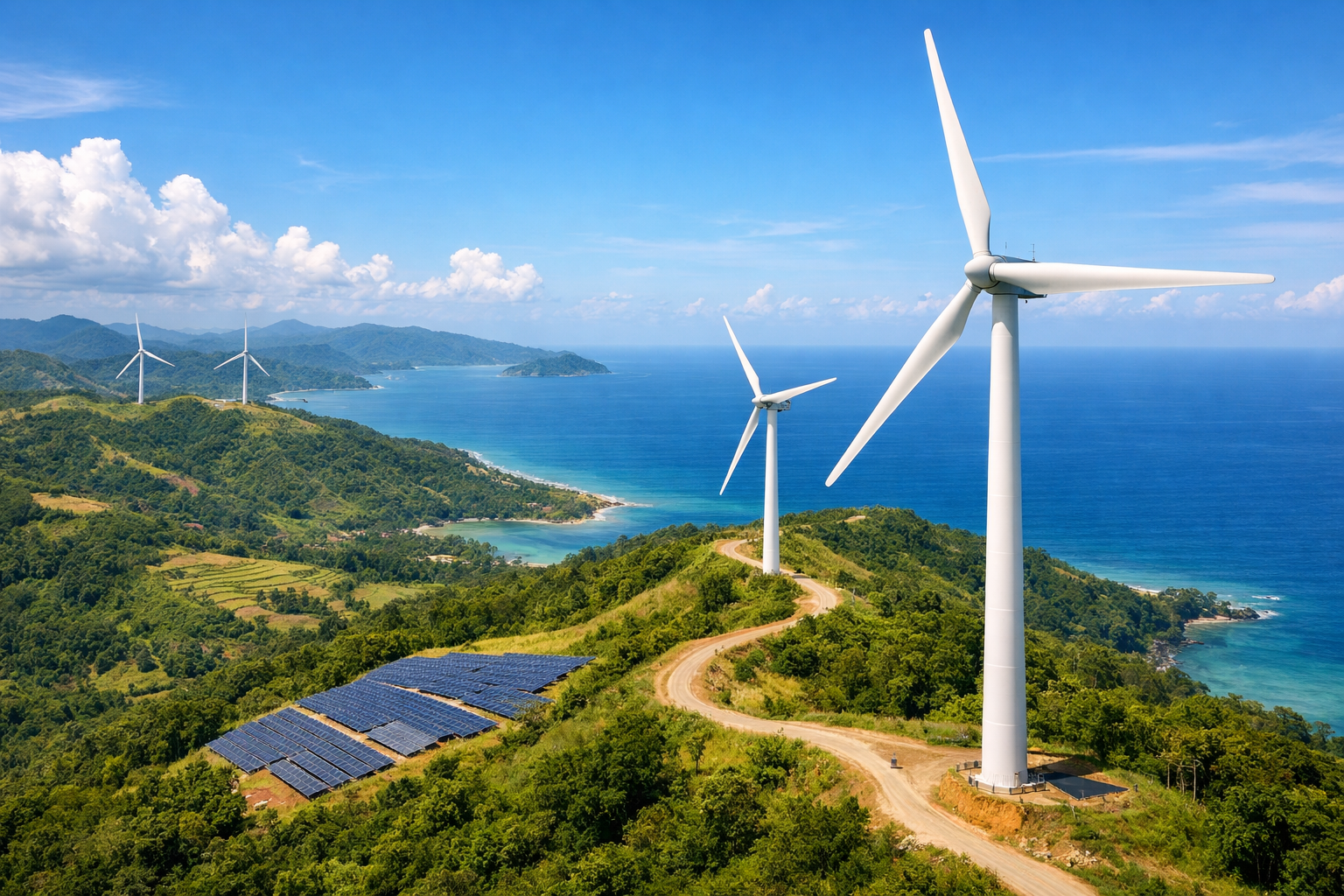
ACEN Corporation, one of the Philippines’ major renewable energy companies, has finished upgrading a historic wind farm in Ilocos Norte. According to a disclosure filed with the Philippine Stock Exchange on August 12, 2026, the company completed improvements to the 52-megawatt NorthWind project in Bangui Bay—the very first wind farm built in Southeast Asia.
What Did ACEN Do?
Think of it like giving an old but important machine a major tune-up instead of throwing it away. ACEN completed what they call the “NorthWind Maintenance and Repair Program,” which is basically a two-phase project to fix and upgrade all 20 wind turbines at the facility. The work happened between 2025 and 2026.
The company made major improvements to the mechanical parts (the moving pieces) and electrical systems (the wiring and power parts) of the turbines. This makes them work better, more reliably, and helps them last longer.
Why Is This Important?
The NorthWind wind farm was built back in 2005, making it over 20 years old. Instead of tearing it down and building something new—which would create a lot of waste—ACEN decided to upgrade what was already there. This approach is called “asset optimization,” which means making something you already own work better.
According to the company, these upgrades will help NorthWind produce an extra 769 gigawatt-hours (GWh) of clean electricity over the next 10 years. To put that in perspective: that’s enough power for about 188,000 homes and will prevent roughly 592,000 tonnes of carbon dioxide from being released into the air.
About NorthWind Wind Farm
The NorthWind project holds special significance because it was the first wind farm in all of Southeast Asia when it started operating in 2005. Located in Bangui Bay, Ilocos Norte, this facility helped pave the way for renewable energy development across the region.
The wind farm has a capacity of 52 megawatts, which means it can generate 52 million watts of electricity when running at full power. It sends this clean energy to the Luzon power grid, helping supply electricity to homes and businesses.
Benefits Beyond Electricity
Miguel de Jesus, who oversees ACEN’s Philippine operations, explained that the project shows how important it is not just to build renewable energy facilities, but to keep them running well throughout their entire life. By upgrading instead of dismantling, ACEN reduced waste from throwing away turbine parts and kept using infrastructure that’s already connected to the power grid.
The upgrade work also created jobs, with most workers coming from local communities in Ilocos Norte, helping the local economy.
About ACEN Corporation
ACEN Corporation (PSE: ACEN) is the energy company under the Ayala Group, one of the Philippines’ largest business conglomerates. The company focuses entirely on renewable energy—meaning they only generate electricity from clean sources like wind, solar, and water, not from coal or oil.
ACEN operates not just in the Philippines (which is their main market) but also in other countries including Australia, Vietnam, India, and Lao PDR. The company currently has over 7 gigawatts of renewable energy capacity across projects that are either already operating, being built, or committed to be built.
The company has set ambitious environmental goals, aiming to reach “Net Zero” greenhouse gas emissions by 2050, meaning they want to balance out any emissions they create.
ACEN has 39,951,435,064 common shares outstanding, along with two series of preferred shares, according to the SEC filing.
Source Note:This article is based on the company’s official press release and disclosures filed with the Philippine Stock Exchange’s Electronic Disclosure Generation Technology (PSE EDGE) system. For the complete and official version of the announcement, readers may visit the PSE EDGE website and search for the company’s filing directly.