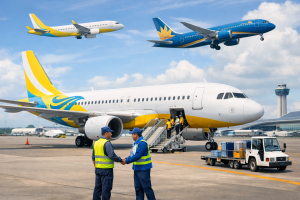

Cebu Pacific (CEB), the Philippines’ leading airline, saw a small decrease in passenger numbers during April 2026, according to their latest traffic performance report.
What Happened in April 2026?
The airline carried almost 2.3 million passengers in April 2026, which is 0.7% fewer passengers compared to April 2025. To put this in simpler terms, imagine if 1,000 people flew with Cebu Pacific last year in April – this year, only about 993 people flew during the same month.
Understanding Seat Load Factor
An important number to understand here is the “seat load factor” or SLF. Think of this like filling up seats in a classroom. If you have 100 seats and 74 students show up, your “load factor” is 74%. In April 2026, Cebu Pacific’s seat load factor was 74.4%, which means about 3 out of every 4 seats were filled. This is lower than last year’s 83.8%, meaning more seats were empty this time around.
The reason for more empty seats? The airline added 11.9% more seats (more flights and bigger planes), but not enough passengers came to fill them all.
Domestic vs International Flights
Domestic flights (flights within the Philippines) carried about the same number of passengers – just 0.1% fewer. However, because the airline added 15.8% more seats on domestic routes, many more seats stayed empty.
International flights (flights to other countries) saw passenger numbers drop by 2.3%, while seats increased by only 2.0%.
The Year So Far (January to April 2026)
Despite April’s slowdown, the overall picture for 2026 looks better. From January to April 2026, Cebu Pacific flew over 9.8 million passengers – that’s 6.2% more than the same period in 2025. Domestic passengers grew by 6.0% to 7.3 million, while international passengers increased by 6.7% to 2.5 million.
Why Did This Happen?
According to Xander Lao, Cebu Pacific’s President and Chief Commercial Officer, the problem started with rising fuel prices caused by world conflicts and tensions between countries. Because fuel became more expensive, the airline had to increase ticket prices and add extra charges.
At first, passengers accepted these higher prices. But then people started booking fewer flights – they were finding the tickets too expensive. This is what Lao called “demand softening” and “slower booking momentum.”
What is Cebu Pacific Doing About It?
The airline responded by adjusting their strategy. They’ve started offering “seat sales” (discounted tickets) in targeted markets to encourage more people to book flights again. According to Lao, this approach seems to be working, with bookings starting to recover in late April and May.
The company says they’re using a “data-driven” approach, which means they’re carefully watching the numbers and making changes based on what they see, trying to balance affordable prices for passengers while still managing their costs properly.
About Cebu Pacific
Cebu Pacific is the Philippines’ leading airline and operates as a low-cost carrier with a “low fare, great value” strategy. Since starting operations in March 1996, the airline has carried over 280 million passengers. It currently flies to 35 domestic destinations and 25 international destinations, operating one of the youngest aircraft fleets in the world with 101 planes.
Source Note:This article is based on the company’s official press release and disclosures filed with the Philippine Stock Exchange’s Electronic Disclosure Generation Technology (PSE EDGE) system. For the complete and official version of the announcement, readers may visit the PSE EDGE website and search for the company’s filing directly.